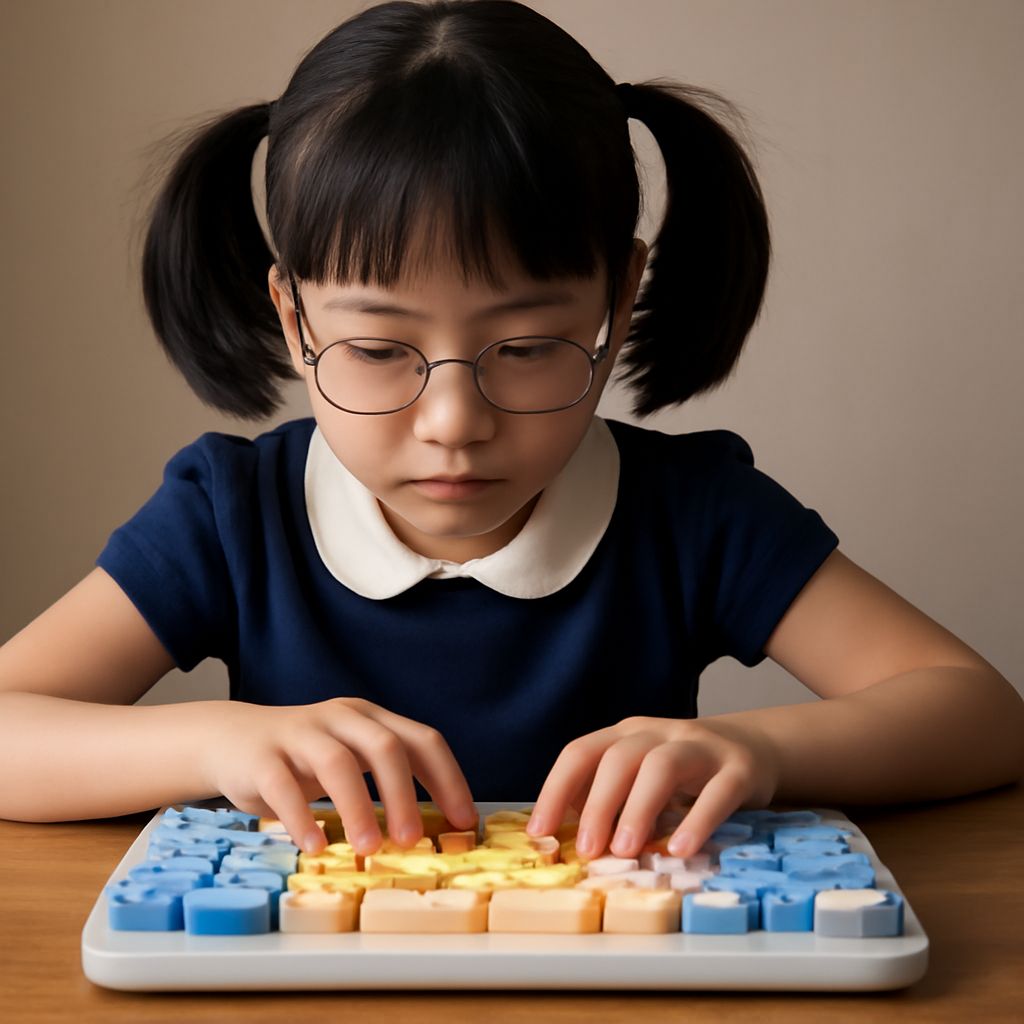
A child who already reads comfortably can try copying a short passage against a clock. A new reader may do better with familiar words or individual letters first. In either case, a child’s typing test should show what to practice, not turn a keyboard into a race track.
Choose a test together, take a relaxed first attempt, and save both the speed and accuracy results. Those two numbers tell a more useful story than speed alone.
Typing test kids can finish comfortably
Start with material your child can read independently. Look for a clear display, a short duration, and instructions about whether errors must be corrected. A one-minute typing test for your child can be a manageable first try; an untimed practice exercise may be a better introduction if the timer is distracting.
A typing test for kids with simple words can help a beginner focus on locating keys. For a more experienced reader, choose a kids typing assessment with sentences, capitals, and punctuation. Compare typing tests for kids by looking at the sample text and the score screen, not just the games or animations around them.
If the passage includes unfamiliar words, the child may spend time decoding them before finding the keys. That is part of a copy-typing task, but it makes the result harder to interpret as keyboard skill alone. Offer a brief look at the directions and a practice round before recording a score. For an emerging reader, try a letter-matching activity separately and treat its result as practice, not a direct comparison with a passage test.
Set up and take the test
Use a familiar physical keyboard on a stable surface. Adjust the chair and screen so your child can sit comfortably, reach the keys without stretching, and see the passage. Let them know that mistakes are expected and they can pause between attempts.
- Open the chosen exercise and explain where the text and results will appear.
- Let your child try a few words without recording the outcome. Explain whether the test permits backspacing or requires corrections.
- Start the timed round. Encourage steady, careful typing instead of calling out a speed target.
- At the end of the typing speed test for your child, record the duration, text level, speed, and accuracy. Note any interruption or difficulty reading the passage.
A typing test kids can complete without help is easier to repeat consistently. If an adult reads each word aloud during one attempt, record that support: the task then differs from independently copying text on the screen.
Read speed and accuracy together
Speed is commonly reported in words per minute, or WPM. Some services calculate a standard word as five typed characters, including spaces; they may handle errors differently. Check how typing tests for children score errors before comparing numbers from separate sites. For example, Typing.com explains its WPM and accuracy calculations.
Accuracy describes how much of the entered text was correct under the test’s scoring rules. A child who types faster but makes many more errors may need more time to produce usable text. For an illustration, compare 15 WPM at 98% accuracy with 20 WPM at 80%: the second result is faster, but its lower accuracy signals more mistakes to work on. These are example scores, not age targets or exact counts of corrected words.
After a typing test for kids, choose one small next step. If errors cluster around a few keys, practice those letters slowly. If the text itself was difficult to read, select simpler material. Praise careful progress and let speed build with familiarity.
Repeat under comparable conditions
Return to the same typing assessment for your child after some practice. Use the same device, keyboard, duration, correction rules, and difficulty level. A comparable passage of similar difficulty reduces the advantage of memorizing an identical one. Record both scores and the date, and note whether the child had help reading.
Over the next few weeks, short, comfortable practice sessions may make familiar keys easier to find. Results can move up and down from one attempt to another, so compare several scores over time. As reading and keyboard experience grow, you can gradually introduce longer passages and punctuation while continuing to watch accuracy alongside speed.