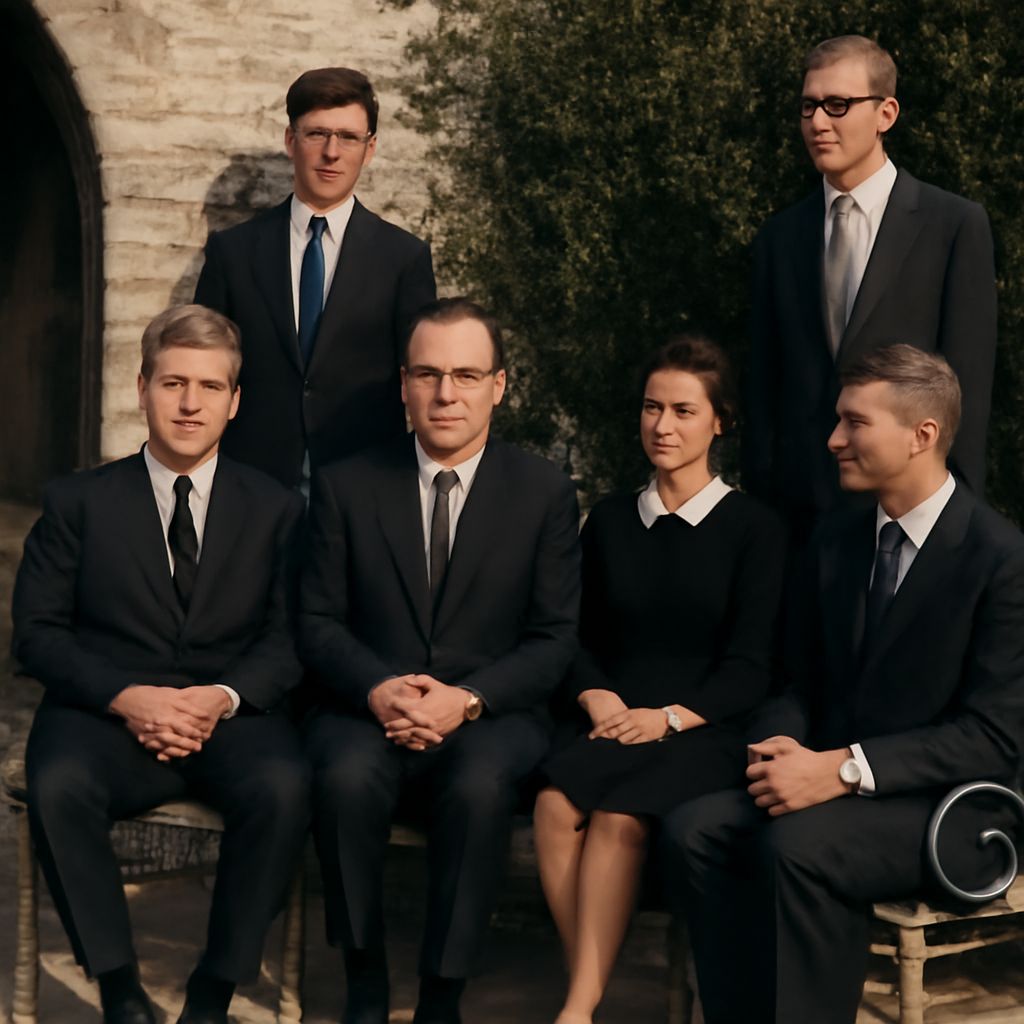
The Koch brothers are Charles and David Koch—two of the most influential businessmen and political donors in modern America. Their leadership of Koch Industries and their active roles in advocacy have made the Koch family a powerful force in both business and politics. To understand who are the Koch brothers and the roots of their influence, you need to look at their family history, business journey, ideological vision, and the enduring impact their actions have had on American society.
The Origins of the Koch Family
The story of the Koch brothers starts with their father, Fred C. Koch. Fred was a chemical engineer who co-founded the company that would become Koch Industries in the 1940s. He designed an innovative method for refining crude oil, which helped build the foundation for the family’s future wealth.
Fred’s values and entrepreneurial spirit shaped the next generation. The Koch family included four sons: Frederick, Charles, David, and William. Charles and David Koch are the two brothers who eventually became the faces of the family’s business empire. Growing up in Wichita, Kansas, the brothers learned about free enterprise, hard work, and a belief in personal responsibility from their father.
Through Fred Koch’s success and values, the Koch family became known for their drive to expand and innovate. After Fred’s death in 1967, the company passed into the hands of his sons, setting the stage for the dramatic growth and influence that would follow.
Charles and David Koch’s Rise
After inheriting their father’s company, Charles Koch took the helm as chairman and CEO in 1967. Under his leadership, Koch Industries grew from a medium-sized oil business into one of America’s largest privately-held companies. The company expanded into industries ranging from energy and chemicals to paper products, ranching, and finance.
David Koch joined the business as an executive in 1970 and later became executive vice president. Charles and David Koch’s partnership was key to the company’s explosive growth. Their focus on innovation, efficiency, and acquisition helped Koch Industries multiply its revenue many times over.
The two brothers also navigated significant family conflict over the direction and control of the company. After a series of legal disputes, Charles and David emerged as the primary leaders, solidifying their partnership in both business and philosophy. Their shared vision was rooted in libertarian ideas, which later guided their political activities.
Influence of the Koch Brothers
Charles and David Koch became famous not only for their business success but for their deep involvement in American politics. Starting in the late 1970s, they began funding think tanks, advocacy groups, and political campaigns that promoted free-market policies and limited government.
The Koch brothers supported groups like Americans for Prosperity, the Cato Institute, and the Heritage Foundation. Their network became known as the “Koch network,” a powerful group of donors and organizations that shaped conservative and libertarian causes across the country.
Through campaign contributions, lobbying, and public outreach, Charles and David Koch influenced key debates on taxes, regulation, environmental policy, and health care. Their critics accuse them of using their wealth to sway elections and block climate action, while supporters argue they have helped protect personal freedoms and encourage entrepreneurship.
This influence extended far beyond direct political donations. The Koch brothers’ reach included funding university programs, scientific research, and grassroots initiatives. Their approach to advocacy, focused on long-term change and coalition-building, remains a model for modern political organizing.
Legacy of the Koch Family
The impact of the Koch family and Koch Industries is visible in both the American economy and political system. Koch Industries, now led by Charles Koch after David’s passing in 2019, is a global company with over $100 billion in annual revenue and tens of thousands of employees.
The Koch family legacy includes not only vast wealth and industrial success, but also a lasting mark on political discourse. Their support for libertarian and conservative ideas has helped shape policy debates for decades. The Koch network continues to exert influence, even as the family’s direct involvement evolves over time.
Philanthropy is also a significant part of their legacy. The Koch brothers and their foundations have donated hundreds of millions to medical research, education, and the arts. While their political activities are often controversial, their charitable giving has supported causes that affect millions of Americans.
Understanding who are the Koch brothers means seeing how Charles and David Koch, building on the foundation laid by Fred Koch, turned a family business into a force that shaped industry, politics, and philanthropy in America.